People visiting Jeju for the first time usually go to see the sea. Stay a few days, though, and you realize that what you meet most often on this island is not the sea but the wind.
Look closely at a Jeju stone wall and something seems off: it is full of gaps between the stones. That isn't careless stacking. It is deliberate.
Build the wall tight to block the wind and it collapses. So the people of Jeju chose instead to leave the wind a way through. The walls that have stood for centuries are not the ones that beat the wind — they are the ones that let it pass.
Camellias don't wither. They fall.
Seeing camellias on Jeju in winter is slightly startling. They don't fade petal by petal like other flowers. One day the whole bloom simply drops.
So beneath a camellia tree the flowers lie still red, piled up. Red above and red below. Letting go at your best — a way of never being seen fading.
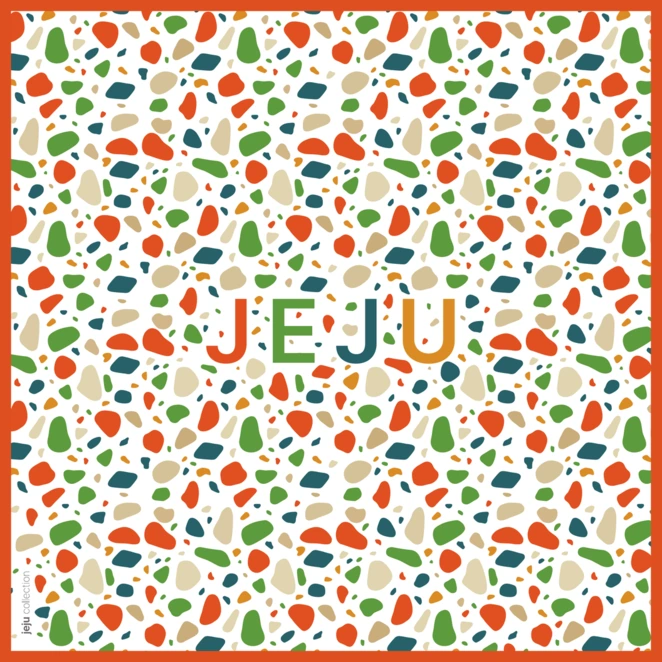
The colors of Jeju begin in black
Jeju is a volcanic island. The field walls are black, the coastal rock is black, and the soil is darker than on the mainland. Jeju is blue in tourist photographs, but walk the island and what is under your feet is almost always black.
And it is precisely that black that makes every other color so vivid — the red of winter camellias, the orange of tangerines hanging in a November field, the turquoise of shallow water. On a light ground these would simply be pretty colors; on black they stand out sharply.
The colors of Jeju are not striking because they are bright. They are vivid because of what lies beneath them.
So this is the color we gave Jeju
kory's Jeju hair roller starts from tangerine — a bright, warm orange, but with a darker tone set underneath it. Orange alone would just make a cheerful object; with a dark color supporting it, you get the contrast you actually saw on the island.
Like a stone wall that leaves the wind a way through, we thought color needs its empty places too.